Tools & Teaching Strategies for Grades 4-8
Teachers need to consider some pragmatic issues when designing a solid STEM lesson, including basic information about your students, effective teaching practices, available resources, and more. Use these questions to help you anticipate and think through what’s ahead.
Problem-solving is a central feature of STEM. But coming up with real-world engineering problems for kids to solve can be challenging in itself. Here are some ideas for places to explore for project ideas and a few tips to guide you in making the best selections.
Creativity is crucial when it comes to STEM education. According to the Future of Jobs report, creativity is one of the three top “must-have” skills in our workforce and society. Fostering creativity should be a natural part of your STEM projects.
If your STEM projects need an occasional boost or produce exceptional results, give your students a chance to take their final prototypes beyond a conceptual level. Imagine your students thinking: Can our design really be produced and used – even if we can make only a few?
Good science, math and technology programs can have many different “looks,” but if we’re going to call a program “STEM” these 10 STEM criteria should be at the center. First and foremost, authentic STEM programs incorporate the engineering design process.
Why is everyone talking about the importance of STEM for today’s students? Author and STEM curriculum designer Anne Jolly offers seven compelling reasons for STEM studies, as we think about what it means to live and prosper in the 21st century.
Today’s employers routinely say teamwork, collaboration, communication, and flexibility are essential skills. In STEM class, as they interact with peers, students practice these life skills in real time with immediate feedback and opportunities for reflection and growth.
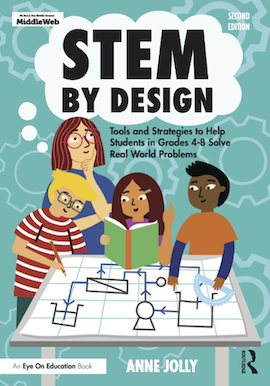
Anne Jolly’s book STEM by Design includes 40 design tools. These resources will help STEM teachers and program leaders create curriculum, design lessons, build student teams, and engage colleagues and communities. You’ll find free downloads at this page!
Let’s consider the main technology you will include in your STEM projects to be digital technology – primarily computers. So what are some ways you authentically integrate digital technology in your STEM projects? Here are six general categories to consider.
Do you ever talk to students about STEM careers in engineering? We really can’t expect them to appreciate the many interesting opportunities without some awareness raising. Anne Jolly has put together a 3-minute student awareness survey that can help.